Desk Lamp vs Table Lamp: 5 Differences Before You Buy
Desk Lamp vs Table Lamp isn’t a small choice; pick wrong, and you’re stuck with glare, clutter, and a room that just feels off.
Zarvo Lighting’s 2025 design guidance emphasizes task lighting for precision and ambient lighting for comfort, noting placement and diffusion shape visual ease and mood.
This guide shows which lamp fits how you actually live every day.
Key Points: Desk Lamp vs Table Lamp Harmony
➔ Task vs. Ambiance: Desk lamps spotlight work areas with cool, directional LED light; table lamps offer warm, diffused glow for cozy ambiance and decoration.
➔ Placement & Height: Adjustable‐arm desk lamps optimize task lighting at eye level; table lamps pair with nightstands or side tables to prevent glare and match room style.
➔ Features & Function: Choose dimmable, gooseneck desk lamps for study and office tasks; opt for USB-powered or smart table lamps with fabric shades to reduce clutter and enhance mood.
Desk Lamp Vs Table Lamp: Bulb Types
Picking between a desk lamp and table lamp isn’t just style—it’s about how light behaves in your space. In this Desk Lamp vs Table Lamp guide, we break down bulb types so your setup actually works day to day.
Desk Lamp
When comparing desk lamp vs table lamp setups, the desk side leans practical and precise. A desk lamp is all about task lighting and a focused beam, usually driven by LED bulb tech for efficiency and long life. You’ll also see halogen bulb, incandescent bulb, and even fluorescent bulb options, though modern picks favor LEDs or a smart bulb for control.
-
Core traits:
-
Adjustable arms for angle control
-
Adjustable brightness for late-night work
-
Cooler color temps that keep eyes alert
-
1) Choose bulb type →
2) Match brightness (lumens) →
3) Tune color temp →
4) Position for glare-free use
A quick comparison helps:
| Bulb Type | Avg Watt (W) | Typical Use Case |
|---|---|---|
| LED bulb | 5–12 | Study, office precision |
| Halogen bulb | 20–50 | Bright, crisp tasks |
| Fluorescent bulb | 8–15 | Budget office setups |
Short takes:
-
LED wins on efficiency
-
Halogen feels brighter, runs hotter
-
Fluorescent is fading out
If you’re weighing desk lamp vs table lamp choices, brands like Zarvo Lighting keep desk models clean, flexible, and easy to tune without fuss.
Table Lamp
Now flip to the softer side of the desk lamp vs table lamp debate. A table lamp is about ambient lighting and a cozy vibe, often using incandescent bulb, LED bulb, or a decorative bulb under a shade that spreads diffused light. Many run on an E26 base, so swapping bulbs is simple.
-
What defines it:
-
Warm glow over sharp focus
-
Fabric or glass shades for spread
-
Style-first, but still functional
-
Multi-step feel for dialing it in:
1) Pick shade material → affects diffusion
2) Select bulb → warm 2700K for comfort
3) Set placement → eye-level glow, no harsh hotspots
Nested considerations:
-
Bulb choice
-
LED bulb: efficient, dimmable
-
Incandescent bulb: classic warmth
-
-
Light effect
-
Diffused light through shades
-
Ambient lighting for rooms, not tasks
-
Quick notes:
-
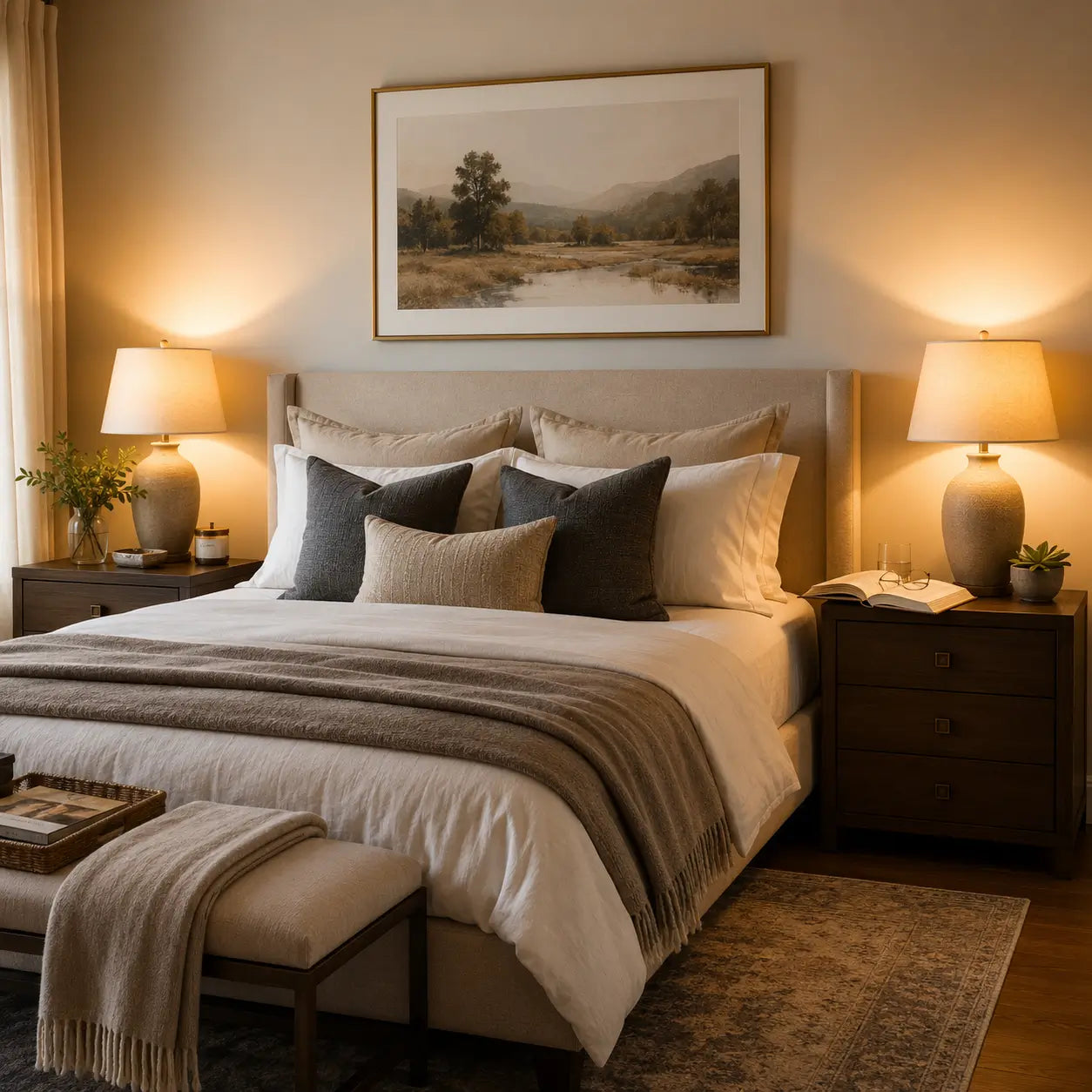
Great for bedrooms and living rooms
-
Less ideal for detailed work
In a desk lamp vs table lamp setup, mixing both often works best—focused light where you need it, soft light where you relax. Zarvo Lighting leans into this balance, offering table designs that feel warm without sacrificing bulb flexibility.
3 Pain Points Solved By Table Lamps
Picking between a desk lamp vs table lamp can feel oddly tricky. But once you match lighting to real-life habits—reading, charging, relaxing—it clicks fast, and your space suddenly works with you, not against you.
Eye strain during reading? Dimmable nightstand lamp to the rescue
When eye strain creeps in during late-night reading, the wrong light is usually the culprit. A dimmable lamp on a nightstand lamp setup fixes that with precise brightness control and better lighting comfort.
-
Light behavior breakdown
-
Brightness range
-
Low (10–30%): soft, minimal glare
-
Mid (40–70%): balanced visual health support
-
High (80–100%): task clarity, but harsher
-
-
-
Desk lamp vs table lamp comparison for reading comfort
| Lighting Type | Brightness Control | Glare Level | Best Use Case |
|---|---|---|---|
| Desk Lamp | High precision | Medium | Focused tasks |
| Table Lamp | Smooth dimming | Low | Bedside reading |
| Hybrid Lamp | Adaptive | Low-Medium | Flexible rooms |
| Overhead Light | Fixed | High | General lighting |
-
Practical takeaway
-
Desk lamp vs table lamp? For books in bed, table lamps win.
-
Zarvo Lighting models keep dimming smooth, not jumpy.
-
Cluttered charging station? USB-powered bedside lamp for wireless charging
A messy charging station kills the vibe fast. A USB-powered lamp or bedside lamp with wireless charging cleans it up while keeping device charging simple and organization tight.
• Desk lamp vs table lamp setup?
-
Desk lamp: great for work cables
-
Table lamp: better for sleep zones
1) Plug fewer things
2) Drop your phone on the base
3) Keep cords tucked behind
Quick note: desk lamp vs table lamp choices matter more in small rooms—table lamps reduce visible clutter better.
Zarvo Lighting keeps ports subtle, so your nightstand doesn’t look like a tech pile.
Harsh lighting for ambiance? Soft glow resin table lamp for cozy evenings
Harsh lighting ruins ambiance fast. A soft glow resin lamp or shaded table lamp builds cozy evenings with warm mood lighting and a calmer atmosphere.
Step flow:
-
Swap overheads for side lighting
-
Use warm tones (2700K–3000K)
-
Let light bounce, not hit directly
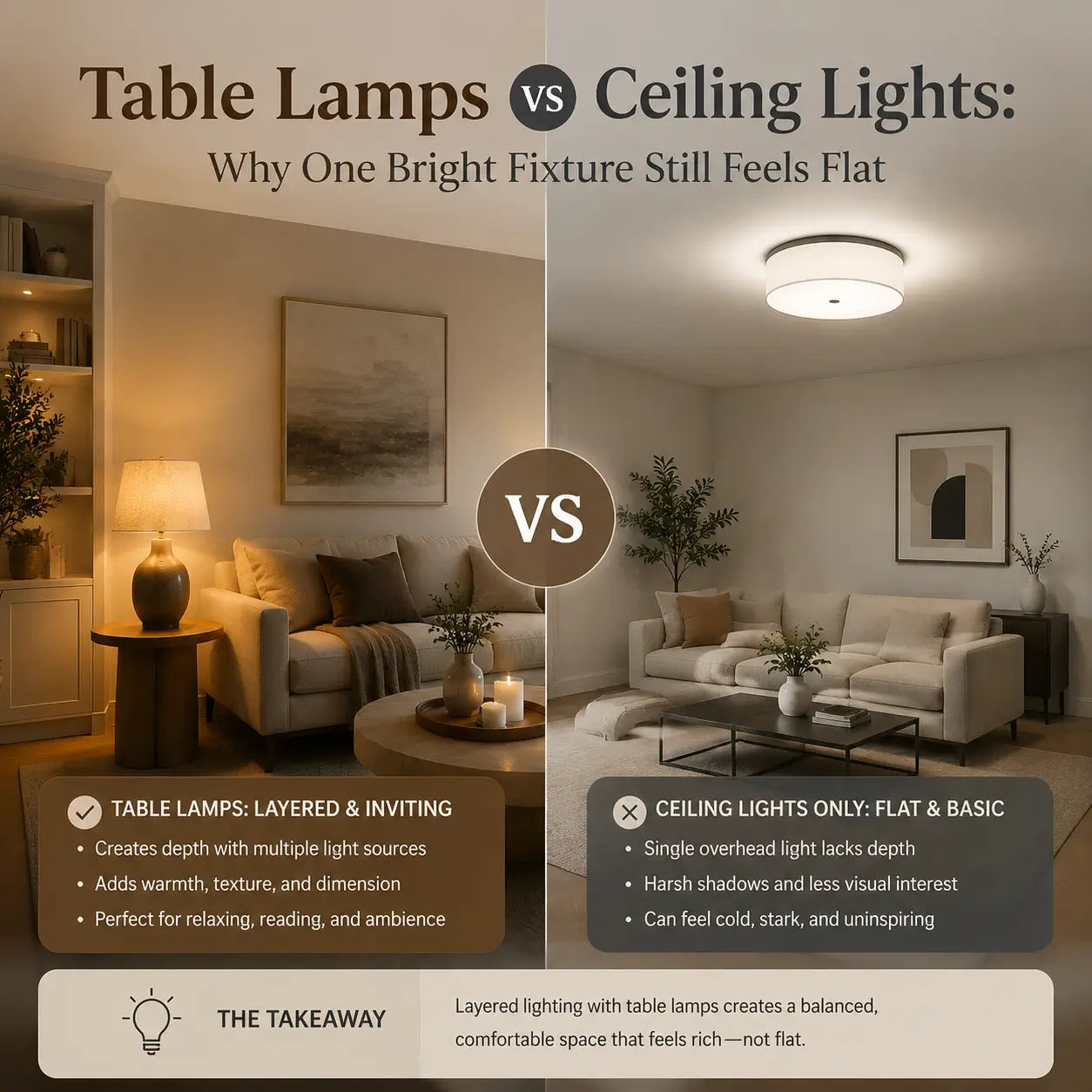
Desk lamp vs table lamp debate here leans strongly toward table lamps—they spread light instead of aiming it.
“Ambient lighting continues to trend toward softer diffusion and layered sources in residential spaces.” — Lighting Research Center, 2025
Short takeaways:
-
Desk lamp vs table lamp isn’t just style—it shapes mood
-
Table lamps soften rooms instantly
-
The right glow makes everything feel slower, better
Why Is Lamp Height So Important?
Height sounds boring, but it quietly decides how your space feels and how your eyes behave. In the whole Desk Lamp vs Table Lamp debate, height is the sneaky factor that makes one setup feel effortless and the other just…off. From sharp task focus to cozy room glow, getting it right keeps things practical and easy on your eyes.
Optimal task lighting with adjustable-arm desk lamps
When comparing Desk Lamp vs Table Lamp, the desk lamp wins for focused task lighting, especially when an adjustable arm lets you dial in illumination exactly where your workspace needs it.
-
Core setup flow
-
Position the desk lamp slightly above the work surface
-
Angle the adjustable arm so light intensity lands just ahead of your hands
-
Keep shadows behind your dominant hand for cleaner visibility
-
-
Fine-tune for ergonomics
-
Lower for reading
-
Raise slightly for typing or sketching
-
-
1) Desk Lamp vs Table Lamp for studying → desk lamp gives tighter beam control
2) Desk Lamp vs Table Lamp for crafts → adjustable arm reduces shadow clutter
3) Desk Lamp vs Table Lamp for office work → balanced illumination improves focus
A well-placed lamp from Zarvo Lighting keeps your workspace crisp without blasting your eyes.
Preventing glare and eye fatigue with correct height
Glare is the silent mood killer. In Desk Lamp vs Table Lamp choices, height decides how light direction interacts with screens and pages, shaping eye comfort and long-term visual health.
“Improper lighting angles remain a leading contributor to digital eye strain in hybrid work setups.” — American Optometric Association, 2025 update
-
Height logic
-
Keep lamp height below direct eye line
-
Tilt light away from reflective surfaces
-
Balance with ambient light to soften contrast
-
-
• Quick cues
• Harsh reflections = too high or wrong angle
• Squinting = poor glare control
• Dry eyes = rising eye strain
Desk Lamp vs Table Lamp setups both benefit, but desk lamps allow tighter correction.
Matching lamp height to room placement and style
Here’s where Desk Lamp vs Table Lamp becomes a style call. A tall table lamp shapes room decor, while a compact desk option hugs function.
-
Placement chain
-
Align lamp placement with furniture height
-
Nightstands: shade near eye level when seated
-
Desks: lower, task-focused stance
-
-
Match interior design tone
-
Modern → slimmer profiles
-
Classic → fuller bases
-
-
Short notes:
Balanced lighting design supports visual balance. Big room? Go taller. Tight corner? Stay compact. Desk Lamp vs Table Lamp isn’t a fight—it’s coordination. Zarvo Lighting designs make that balance feel natural without overthinking it.